7 Affiliate Program Examples Every Ecommerce Store Can Learn From
Running an ecommerce store in 2026 means watching your customer acquisition costs climb every quarter. Facebook CPMs are up. Google Shopping bids are more competitive than ever.
Meanwhile, successful brands like Sephora, Chewy, and IKEA are quietly building a different kind of growth engine—one that costs nothing upfront and only pays out when sales actually happen. They’re using affiliate programs, and the results speak for themselves: 81% of brands now run affiliate programs, with affiliate marketing contributing 5-25% of their total revenue.
The best part? You don’t need Sephora’s budget or team to make this work. With the right affiliate marketing platform for ecommerce, even mid-sized stores can build professional programs that turn customers, bloggers, and content creators into a scalable sales channel.
In this article, we’ll show you exactly how affiliate programs work for ecommerce, why they’re more cost-effective than traditional marketing, and walk through 7 real-world examples you can model in your own store.
Why Affiliate Marketing Works for Ecommerce
Affiliate marketing isn’t just a trend — it’s a proven growth engine for ecommerce. In fact:
Affiliate marketing is growing fast, with the market expanding at an annual rate of around 20%.
For major brands, affiliate sales can account for 5% to 25% of total revenue.
Today, 81% of brands actively run affiliate programs to drive sales and reach new audiences.
Source: Awin, Procient Market Insights
But beyond the numbers, the real impact comes from what a well-designed program does for your business. A strong affiliate program for ecommerce turns your partners — whether they’re bloggers, content creators, or loyal customers — into an extension of your marketing team. It helps you reach new audiences, build trust, and drive sales in a way that feels scalable and sustainable.
The most successful programs share a few key traits:
- Simple, clear commission structure — affiliates know exactly what they earn for each sale or lead.
- Transparent tracking — every click, referral, and purchase is accurately recorded so affiliates are rewarded fairly.
- Support and resources — banners, newsletters, product feeds, and sneak peeks give affiliates what they need to create content that converts.
- Easy partner management — onboarding, updates, and communication are smooth, letting you focus on growing the program instead of chasing spreadsheets.
By focusing on these elements, even mid-sized stores can run professional affiliate programs like Sephora, Chewy, or Huda Beauty — giving partners everything they need to succeed and helping your business grow.
Proven Ways Referral Programs Grow Ecommerce Business
Affiliate programs aren’t the only performance-based growth engine in ecommerce. Many brands combine affiliate marketing with customer referral programs — and the results can be even more powerful. While affiliates bring in new audiences through content and media, referral programs turn your existing customers into brand advocates.
Here’s why referral programs work so well:
Higher Conversion Rates Through Trust
People trust recommendations from friends far more than ads. When a customer shares a referral link, it carries built-in credibility — which often leads to significantly higher conversion rates compared to paid traffic.
Lower Customer Acquisition Costs
Like affiliate marketing, referral programs are performance-based. You only reward customers when a successful referral happens. There are no upfront media costs, making it one of the most cost-efficient growth channels.
Increased Customer Lifetime Value
Referral programs don’t just bring in new buyers — they increase loyalty among existing ones. Customers who refer others tend to:
- Purchase more frequently
- Stay longer
- Feel more connected to the brand
That means referral marketing boosts both acquisition and retention.
Scalable Word-of-Mouth Growth
Word-of-mouth has always been powerful. Referral programs simply systematize it. Instead of hoping customers talk about you, you:
- Provide them with unique referral links
- Offer incentives (discounts, store credit, rewards)
- Track performance automatically
This turns organic advocacy into a predictable, scalable channel.
7 Examples of Affiliate Programs in Ecommerce
Affiliate programs aren’t just theoretical — they deliver real growth when managed effectively. Below are seven real-world examples of affiliate programs. You can implement these programs without the hassle of manual tracking or administration using an Affiliate Programs extension for Magento 2.
Sephora Affiliate Program
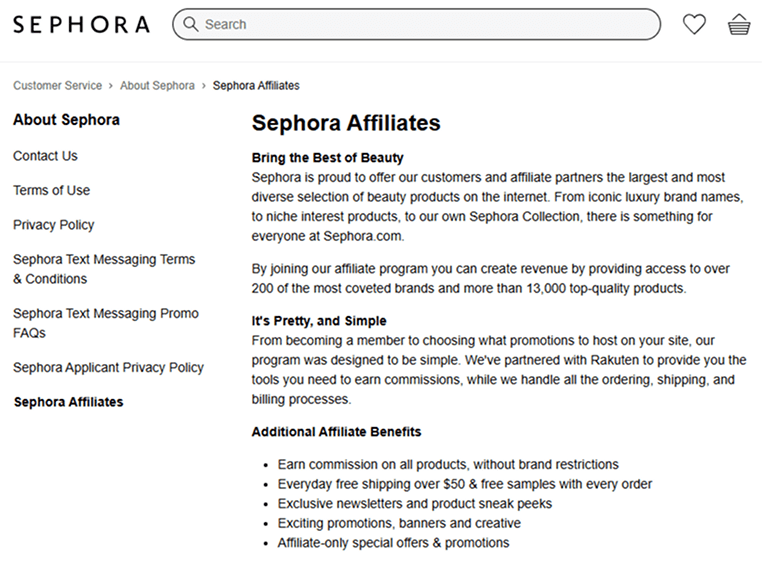
If beauty is your niche, Sephora offers a dream program. Affiliates can earn roughly 5–7% commission per sale on over 13,000 products from 200+ brands, and you’ll need to reach at least $50 in commissions before payouts are issued. You get access to banners, creative assets, newsletters, and exclusive sneak peeks — while Sephora handles the orders, shipping, and billing. With a simple dashboard to track clicks and sales, it’s perfect for bloggers or beauty enthusiasts looking to monetize their content.
IKEA Affiliate Programme
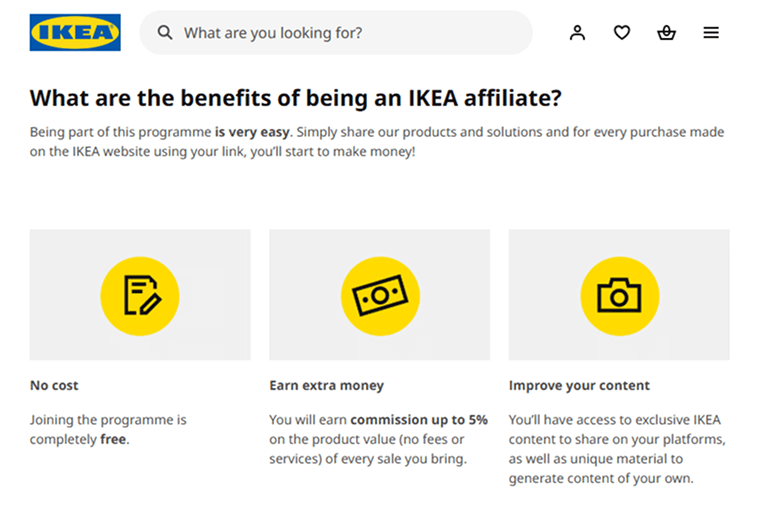
IKEA invites content creators, bloggers, and media partners to earn up to 5% commission on every sale made through their affiliate links. Joining is free and simple, and affiliates gain access to exclusive IKEA content and creative materials to enhance their own posts. This program is a clear example of a professional ecommerce affiliate program setup, combining easy registration, commission-based rewards, and content support for partners.
Chewy Affiliate
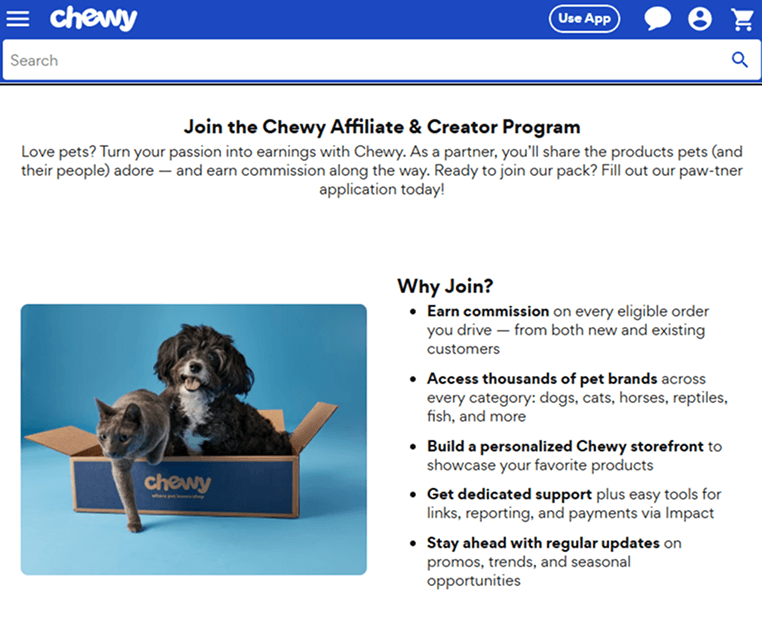
Chewy lets affiliates and creators earn on thousands of pet products, from dog food to horse supplements, with a standard commission of 4% per sale. You can build a personalized storefront, track results, and get updates on seasonal promos. Approved transactions are paid 20 days after the month they’re locked, and referrals are credited for clicks within 30 days. Whether you run a blog or have a strong social following, Chewy’s program makes it easy to turn your passion for pets into income.
Etsy Affiliate Program
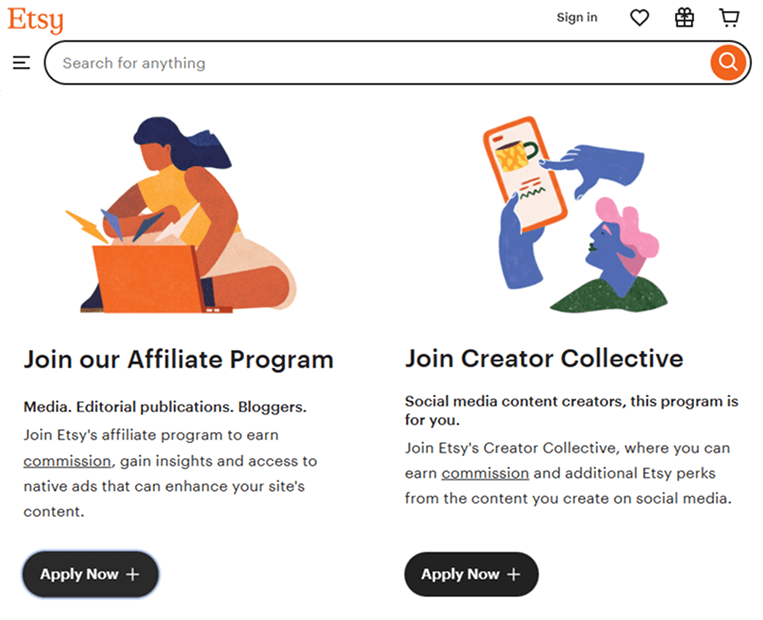
Etsy’s global marketplace gives affiliates the opportunity to promote unique, handcrafted, and vintage items, earning a standard 4% commission per sale. The program includes a 30-day cookie period (7 days in-app), access to product feeds, banners, and a trend-focused newsletter, making it easy to discover items that resonate with your audience.The program is open worldwide (with some exclusions) and is perfect for bloggers, creators, or niche curators who love sharing one-of-a-kind finds.
The Body Shop Affiliate Program
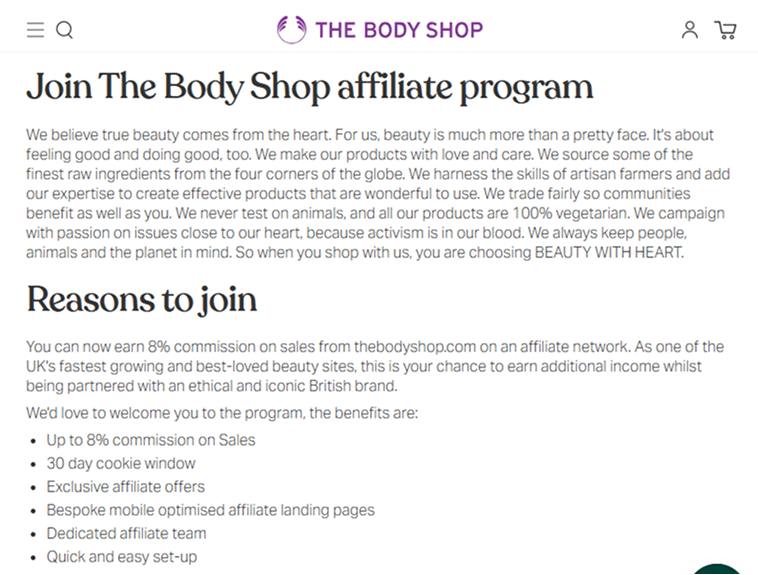
If ethical and sustainable beauty is your focus, The Body Shop lets affiliates earn 8% commission on their products. With a 30-day cookie window, mobile-optimized landing pages, and exclusive offers, this program is straightforward and supportive — a great fit for content creators with a socially conscious audience.
Huda Beauty Affiliate Program
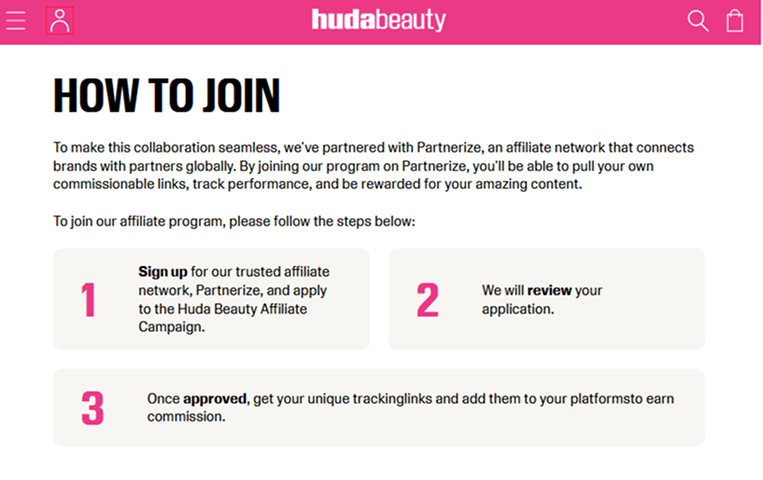
Huda Beauty offers a chance to earn while sharing their award-winning products. Affiliates get early access to launches, marketing assets, and a 30-day cookie window to maximize earnings. Managed via Partnerize, it’s a global program with tools that make tracking and payments seamless.
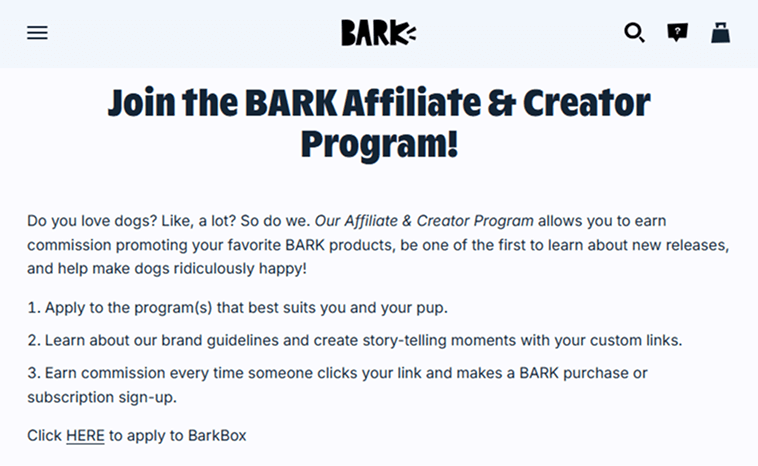
Bark Affiliate Programme
Bark connects people with local service professionals, and affiliates can earn per lead or a percentage of revenue from referred professionals. With over 1,500 service categories, it’s ideal for content creators or bloggers in lifestyle, business, or local services niches. This example of affiliate program provides dashboards, marketing assets, and dedicated support to make promotion simple and effective.
Conclusion
Sephora, IKEA, Chewy, and Etsy didn’t build affiliate programs because they’re trendy. They built them because the math works: lower acquisition costs, higher conversion rates, and you only pay for results.
With 81% of brands now running affiliate programs, this has moved from “nice to have” to competitive necessity. The good news? A Magento 2 Affiliate Program extension makes implementation straightforward—no custom development, no manual tracking, just automated partner management that scales with your business.